The prospects for Christianity in the 21st century largely depend on how Catholicism and Orthodoxy develop together. Particular attention should be paid to the negative trends that are leading to a steady decline in the real influence of Christianity on events and processes worldwide.
The demographic and spiritual center of world Christianity today is not in Rome, Geneva, or Nashville, but in the Global South – in Africa, Asia, and Latin America.
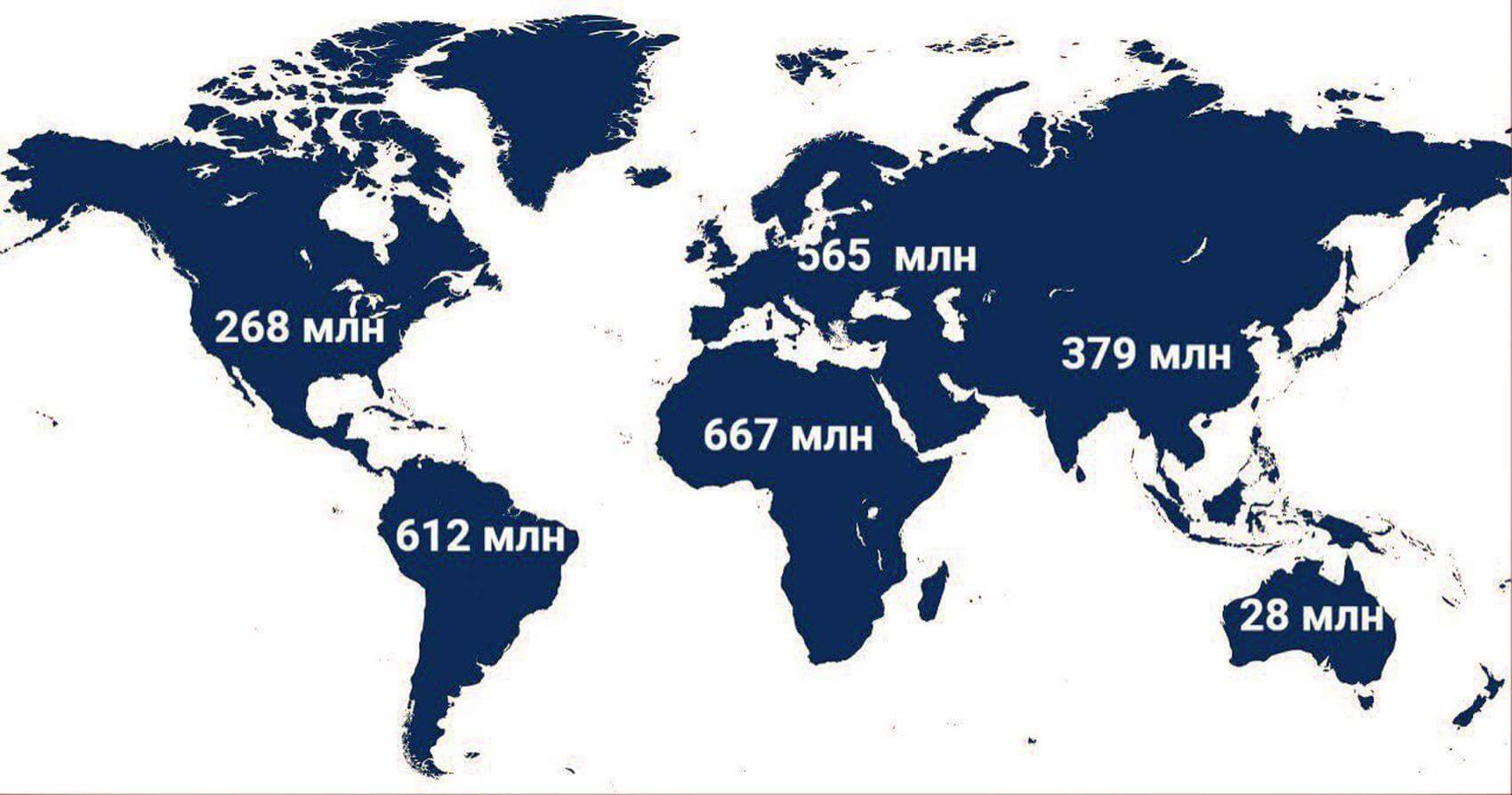
РАСПОСТРАНЕНИЕ ХРИСТИАНСКОЙ РЕЛИГИИ ПО РЕГИОНАМ НА ПЛАНЕТЕ
While at the beginning of the 20th century more than 80% of the world’s Christians lived in Europe and North America, a century later the situation has radically reversed: today, about 61% of Christians are residents of Africa, Asia, and Latin America. Sub-Saharan Africa, where only 1.5% of Christians lived in 1910, has become the largest Christian region on the planet in terms of population, surpassing Europe and now home to almost a quarter of all Christians worldwide.
🔹 In Latin America, once almost monolithically Catholic, there is an explosive growth of evangelical, especially Pentecostal, churches. In Asia, powerful churches and missionary movements are emerging in China, South Korea, the Philippines, and India.
🔹 This demographic shift is driven by three key factors. Firstly, the rapid population growth and high birth rates in the Global South. Secondly, the phenomenal success of missionary activity, particularly of evangelical and Pentecostal movements. And thirdly, the secularization and aging of the population in the historically Christian West, where the number and proportion of Christians are steadily declining.

But this is not just about quantitative changes. A qualitative transformation of Christianity itself is taking place. Faith in the Global South possesses distinct, contextual characteristics that are increasingly shaping its global image.
🔹 In Africa, for example, Christianity is deeply rooted in everyday life. The level of religious involvement there is one of the highest in the world: more than 75% of Christians in every surveyed country in sub-Saharan Africa say that religion plays a “very important” role in their lives, and they pray and attend church more frequently. And it is Africa that is projected to account for almost 70% of the total growth in the world’s Christian population between 2020 and 2070.
🔹 In Latin America, Christianity has become a tool for social mobilization and the formation of a new identity for millions who are leaving traditional Catholicism. Pentecostal churches, which emphasize personal experience of the Holy Spirit, miraculous healings, and material blessings, are proving attractive to the urban poor and even the middle class.
🔹 This new reality presents American evangelicals with complex, and sometimes uncomfortable, questions, forcing them to re-examine their traditional roles and priorities.
🔹 Firstly, the typical portrait of a global evangelical is no longer a white American from the “Bible Belt.” Researchers agree that there is no such thing as a single, unified evangelical. By the broadest estimates, 47% of the world’s evangelicals live in Africa, 26% in Asia, and only 11% in North America. The country with the largest evangelical population is no longer the United States, but China.
🔹 Secondly, serious theological and cultural tensions are escalating. For Christians in the Global South, who grew up in the context of colonialism, poverty, and social injustice, the distinction, common among many Americans, between “evangelism” (caring for the soul) and “social ministry” (caring for the body and society) seems artificial and even harmful. They insist on a holistic approach, where combating systemic sin and oppression is just as important as preaching personal salvation. Criticism of the “coloniality” of Western Christianity, which for centuries imposed its cultural forms as the only correct ones, is becoming increasingly vocal. Now, churches in the South are demanding equal partnership and the decolonization of mission and theology, which calls into question America’s historical role as teacher and sponsor.

Finally, these global shifts are also reflected within the United States itself through growing immigrant and multicultural communities. Haitian, Nigerian, Korean, or Salvadoran churches in American cities bring with them the energy, theology, and social priorities of the Global South. They often combine conservative views on family and morality with an active stance on issues of racial justice, immigration reform, and poverty alleviation.